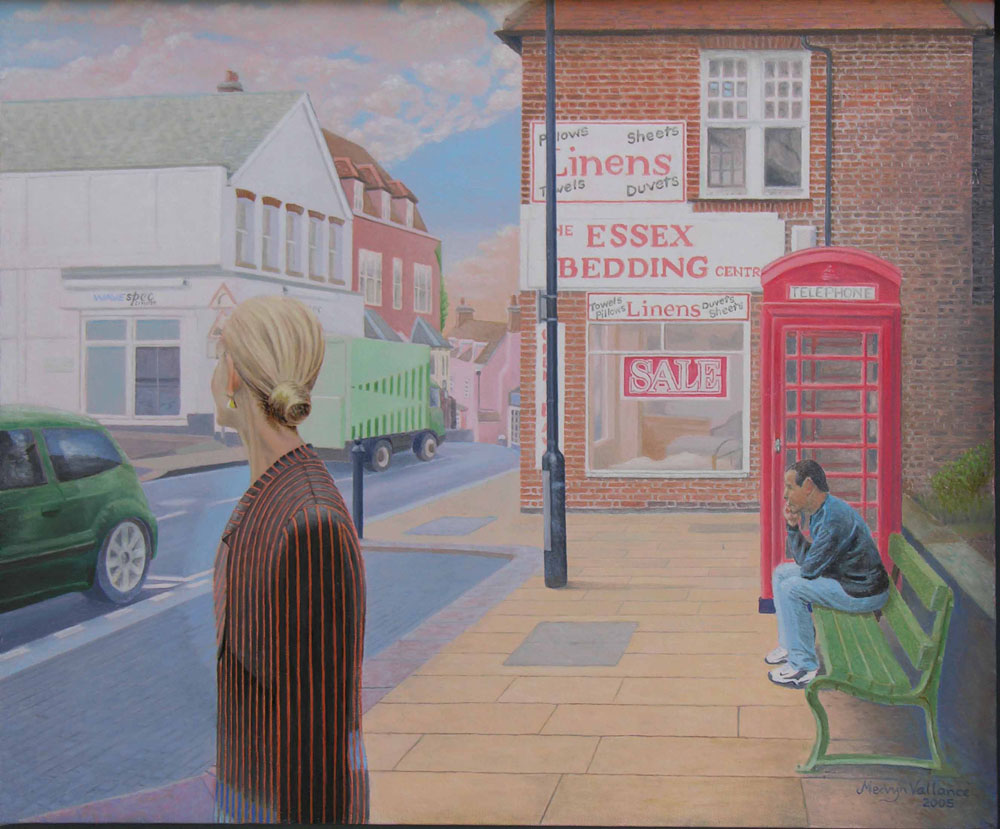
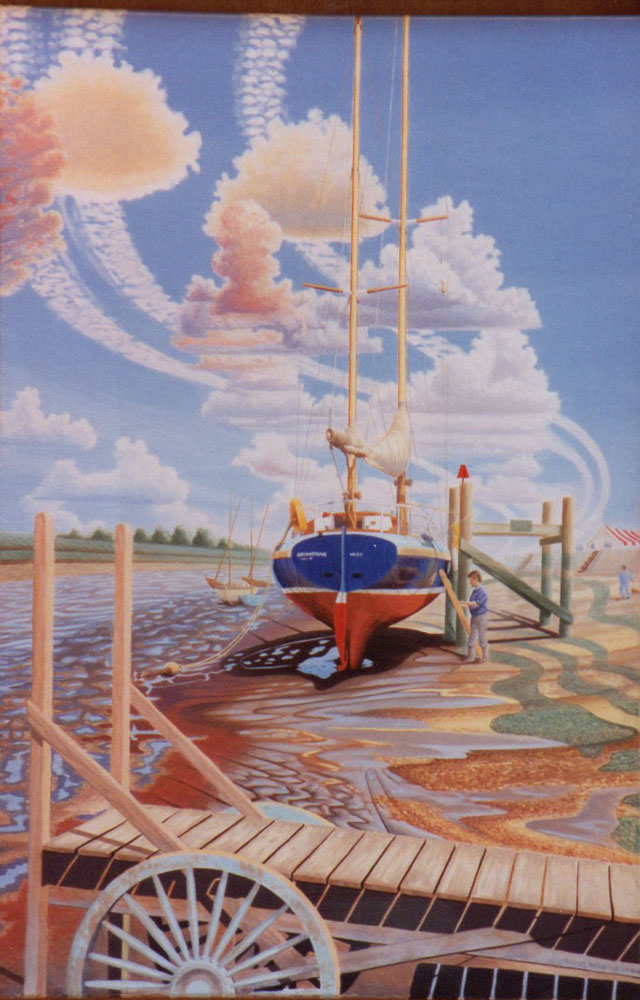
About Mervyn Vallance, Essex Artist
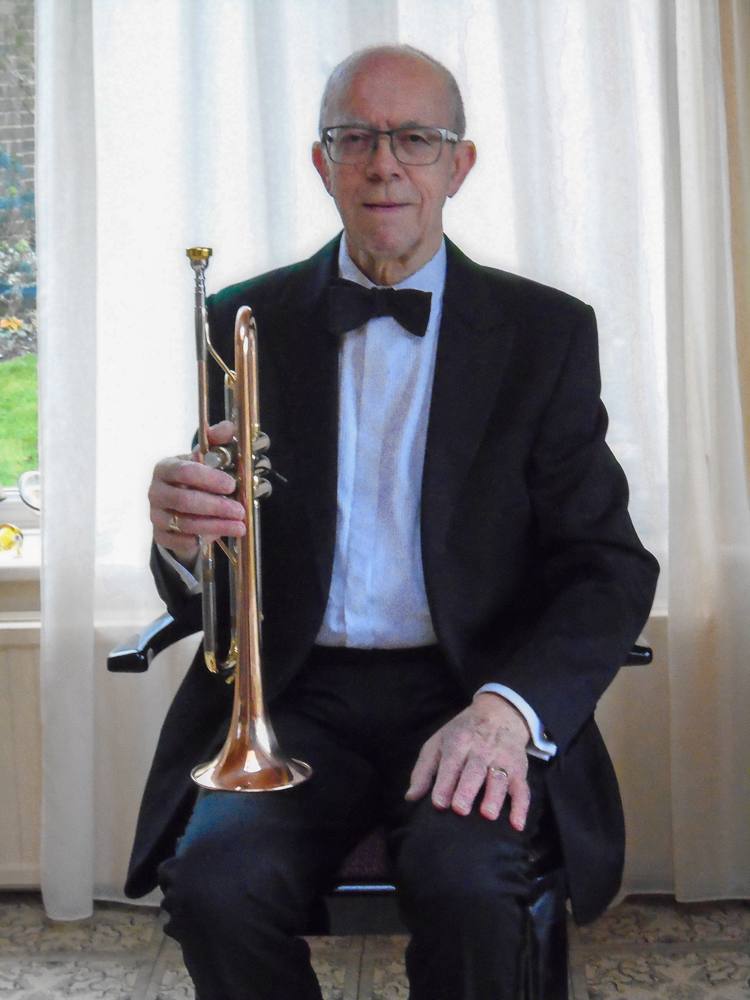
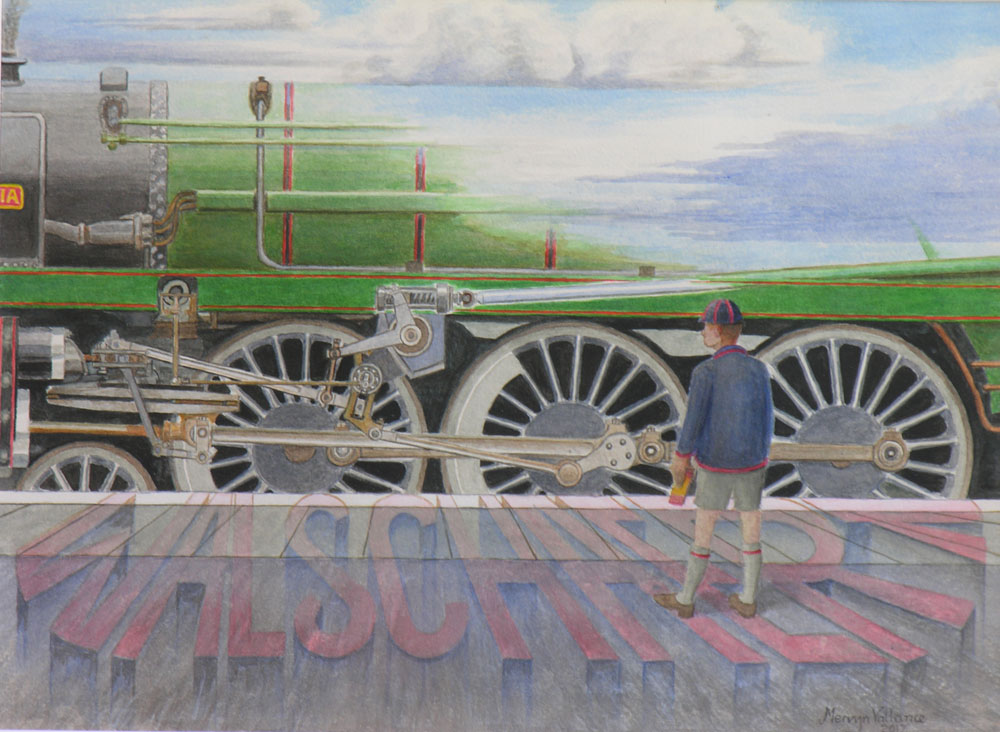
Mervyn was born in Chelmsford, Essex in 1941 and lived with his mother and, as his father was abroad with the RAF, with his grandparents. The house backed onto a railway embankment about a mile from the station. Thus, his earliest memories, apart from being in the air raid shelter, were of steam engines.
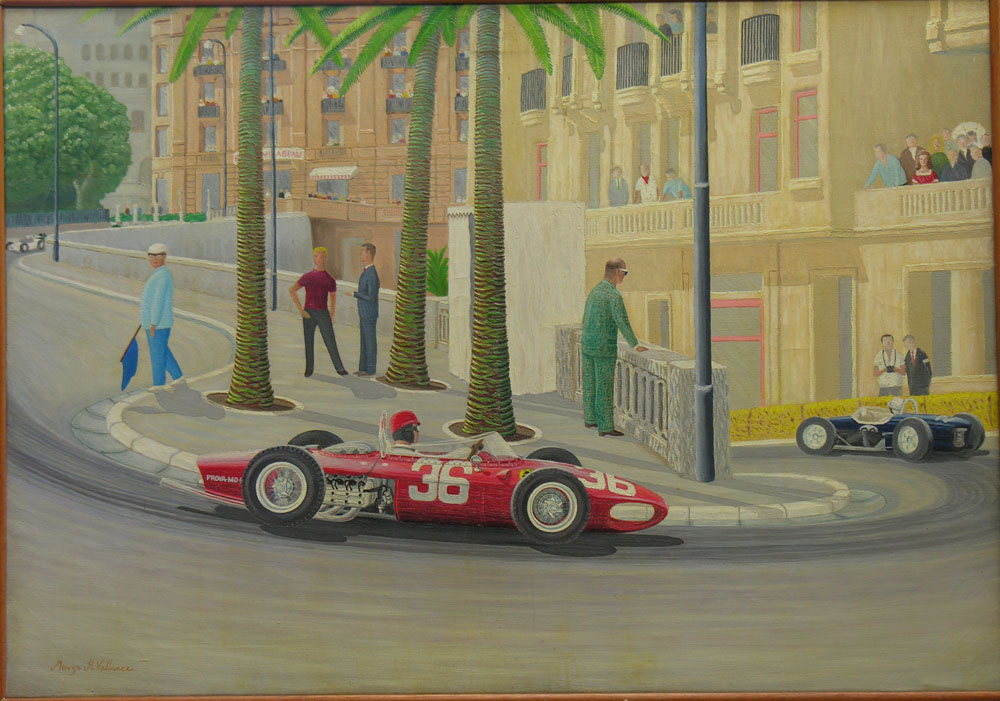
He drew and painted from an early age, but his pictures usually involved trains, boats, planes or anything with wheels. His favourite comic always had, in the centre pages, a diagram of the mechanism of the latest plane, ship or vehicle. He wanted to be the person who produced those pictures. He failed the eleven plus exam and so attended a secondary modern school. At the age of 15 he was given the opportunity to do a two-year course for GCE O Levels at a technical college where he hoped to study art. However, his parents and headmaster advised him against it. He was told by the headmaster: “If you like drawing, become an engineering draughtsman”. The art course coincided with physics, which was important for science or engineering, so it could not be fitted into his timetable.
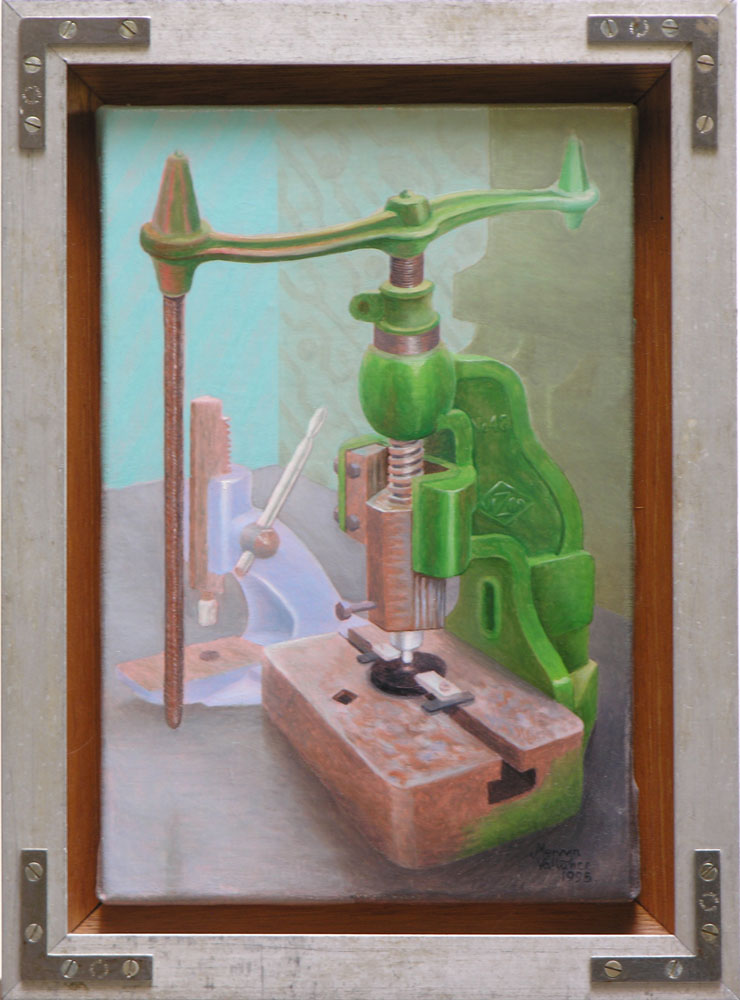
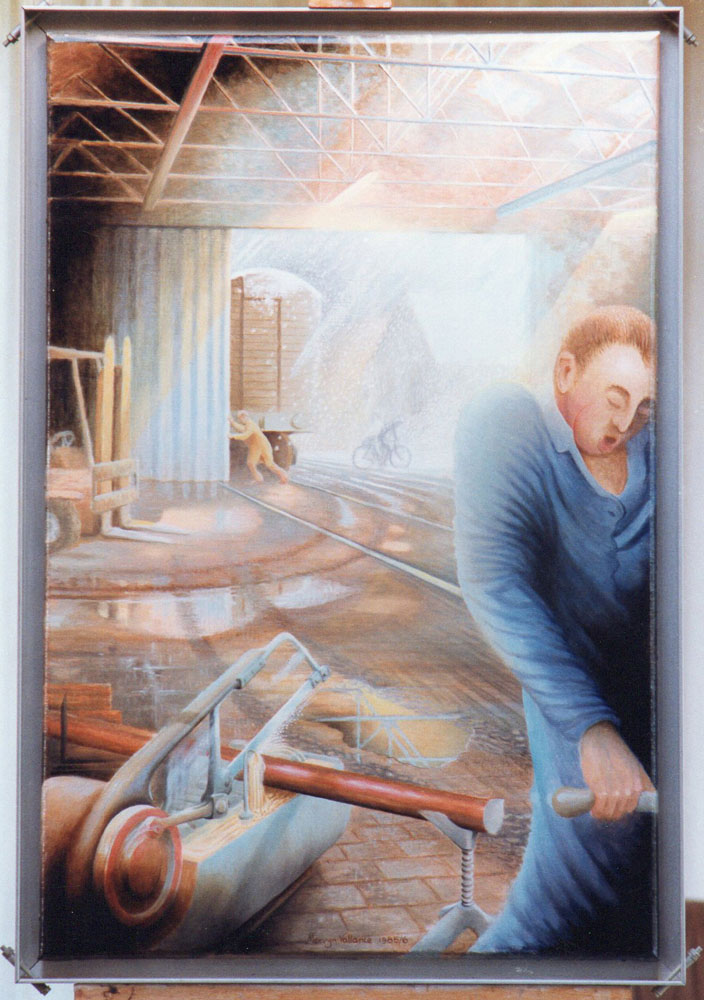
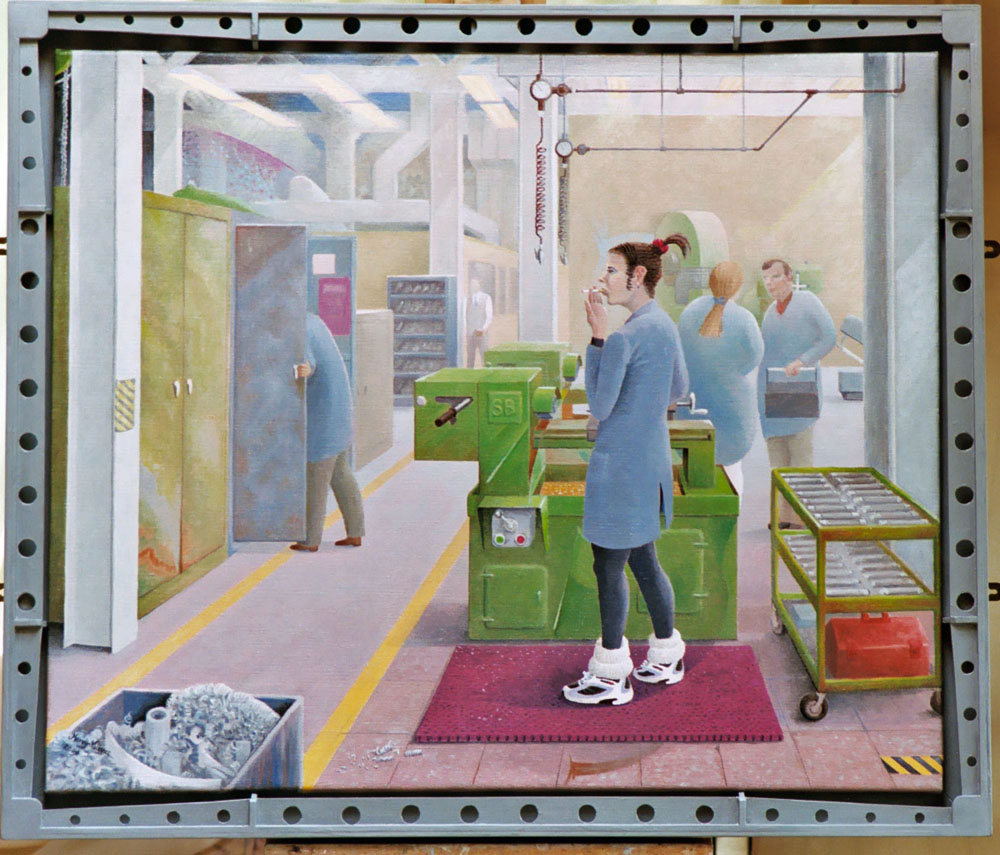
He started an apprenticeship as a draughtsman with a company that made electrical equipment. After the first year of training, which included the use of machines as well as drawing office practice, he was put in the department that made electric motors and generators. During the summer he was in the drawing office and in the winter in the workshops. At one point he walked through a door and found himself in a large area which was dedicated to incoming goods. In a corner was a man operating a power hacksaw, cutting iron bars to length; large sliding doors were open for the delivery of metal. Outside it was snowing. This was the dreadful winter of 1963: three months of snow. The memory of this experience, many years later, became the subject of his painting, Power Hacksaw.
He didn’t take to being a junior draughtsman. There was no chance of creativity or design. Also, he struggled with the course in electrical engineering, particularly the higher qualification. However, his strong inclination toward drawing and painting led him to independently pursue proficiency in oil painting. The book he bought to help him recommended underpainting, particularly for portraits and he became interested in the techniques of the old masters. These techniques influenced his painting throughout his artistic career. His parents had their own house by then and he would paint by standing a canvas on a chair in their dining room. Eventually his life improved, having married and changed job to being a technician with a local firm. His lack of the higher qualifications prevented him from starting as an engineer but from the beginning he was able to design and have equipment made. He was working with the development of camera tubes for use in television cameras. Having come up with ideas which improved the performance of the product he was promoted to engineer.
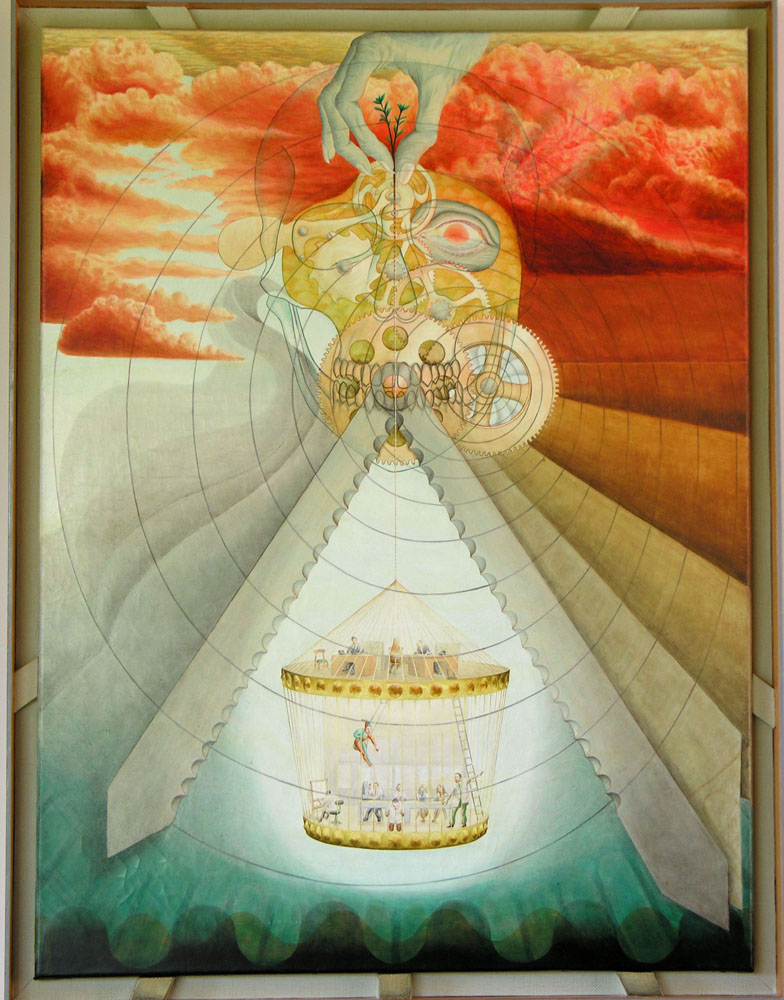
After getting married and purchasing a home, he spent several years away from practicing his art. But his wife encouraged him to resume painting, initially using a clothes horse as an easel until she bought him one. He went to evening art classes and found instructions in water colour techniques useful and occasionally attended life drawing classes. One of his first oil paintings won a prize in a local exhibition and was then accepted for the Royal Society of British Artists at the Mall Galleries. In 1976 Chelmsford had an arts festival and his painting, A Pinch of Thyme, an intricate portrayal of his experience and frustrations regarding his life in the factory, was hung in the Chelmsford and Essex Museum. It was also featured in the local newspapers. As a result of this he was invited to join the Colchester Art Society, which at that time was membership by invitation only. However, he didn’t take up the offer until 1991.
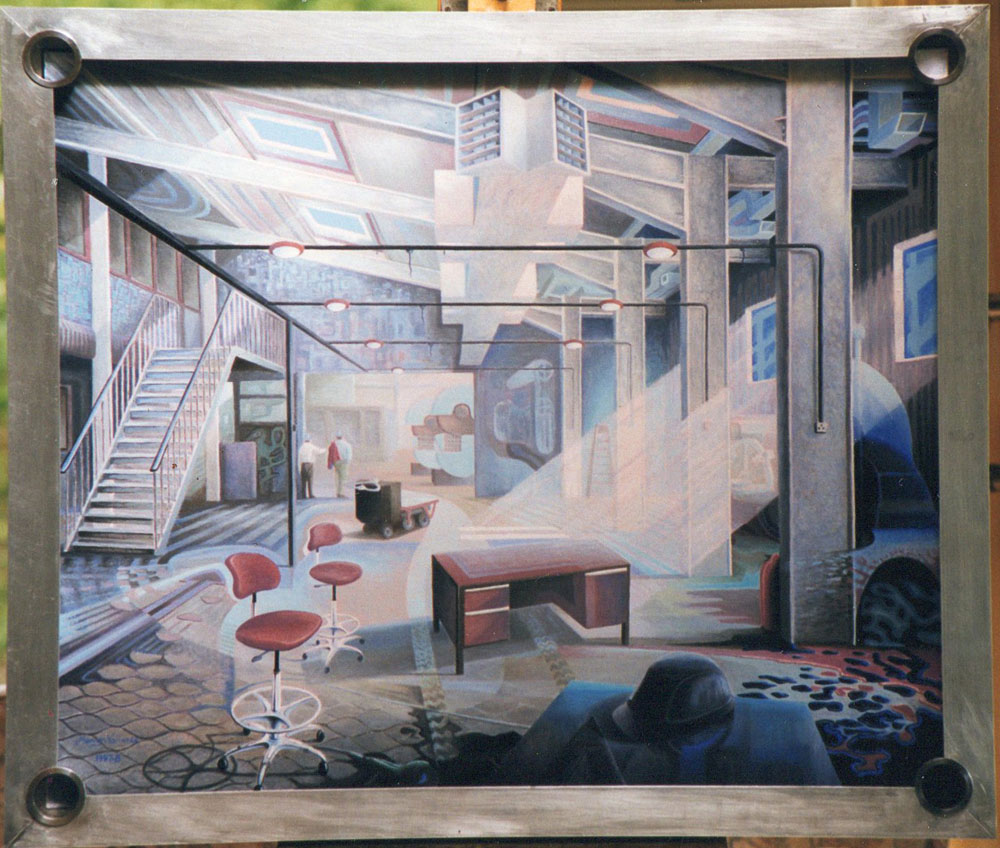
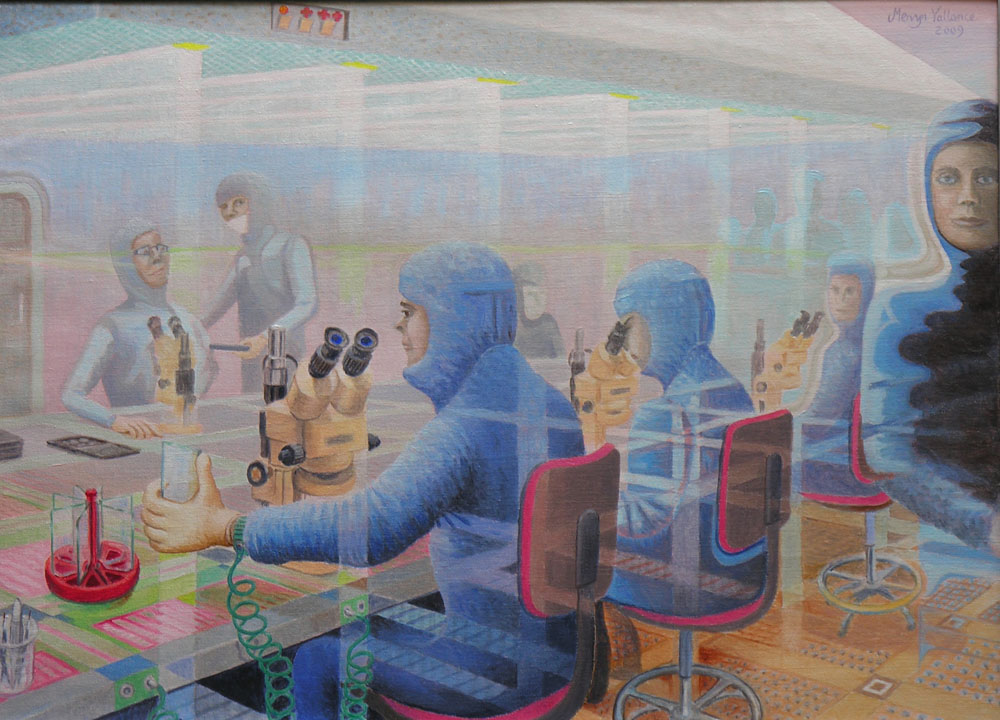
The advent of the silicon chip rendered camera tubes obsolete, leading to the closure of that department. This left a large area of the factory vacant. His memory of this was the inspiration for the painting Empty Factory. He was able to transfer to the company’s solid state imaging department where he spent some time in the clean area: the painting of that name is an insightful vision of the transition from the mechanical to digital age. It is in stark contrast to his works showing scenes from the previous mechanical era. Before his retirement he was using computer aided design which he found more fun than his time on the drawing board.
While he achieved considerable success during his working career in exhibitions, particularly in the Mall gallery and throughout Essex, retirement brought more fulfilment in both art and music. A major accolade was winning the lucrative best in show at the Eastern Open Exhibition at Kings Lynn Art Centre 2005.
His paintings are a true reflection of a life with art at its core.